PPWR applies now. What the EU packaging regulation means if you sell anything in a box
The regulation has applied since 12 August 2026. Most of what bites lands between 2028 and 2040, and nearly all of it is decided in the sketchbook. On 12 August 2026 the European Union’s new packaging regulation started to apply. It is Regulation (EU) 2025/40, known as the PPWR, and it replaces the packaging directive […]
The regulation has applied since 12 August 2026. Most of what bites lands between 2028 and 2040, and nearly all of it is decided in the sketchbook.
On 12 August 2026 the European Union’s new packaging regulation started to apply. It is Regulation (EU) 2025/40, known as the PPWR, and it replaces the packaging directive from 1994.
The difference between a regulation and a directive is the entire point. A directive has to be turned into national law first, and countries land in different places. A regulation applies directly and identically across the union. There is no national version to wait for.
It also reaches further than the map suggests. The requirements attach to packaging placed on the EU market, so a brand in London or Los Angeles shipping into the EU sits under the same rules as a brand in Malmö.
I am writing this as a designer, not as a lawyer. What I am after is the part that gets decided in the sketchbook, long before anyone fills in a declaration of conformity.
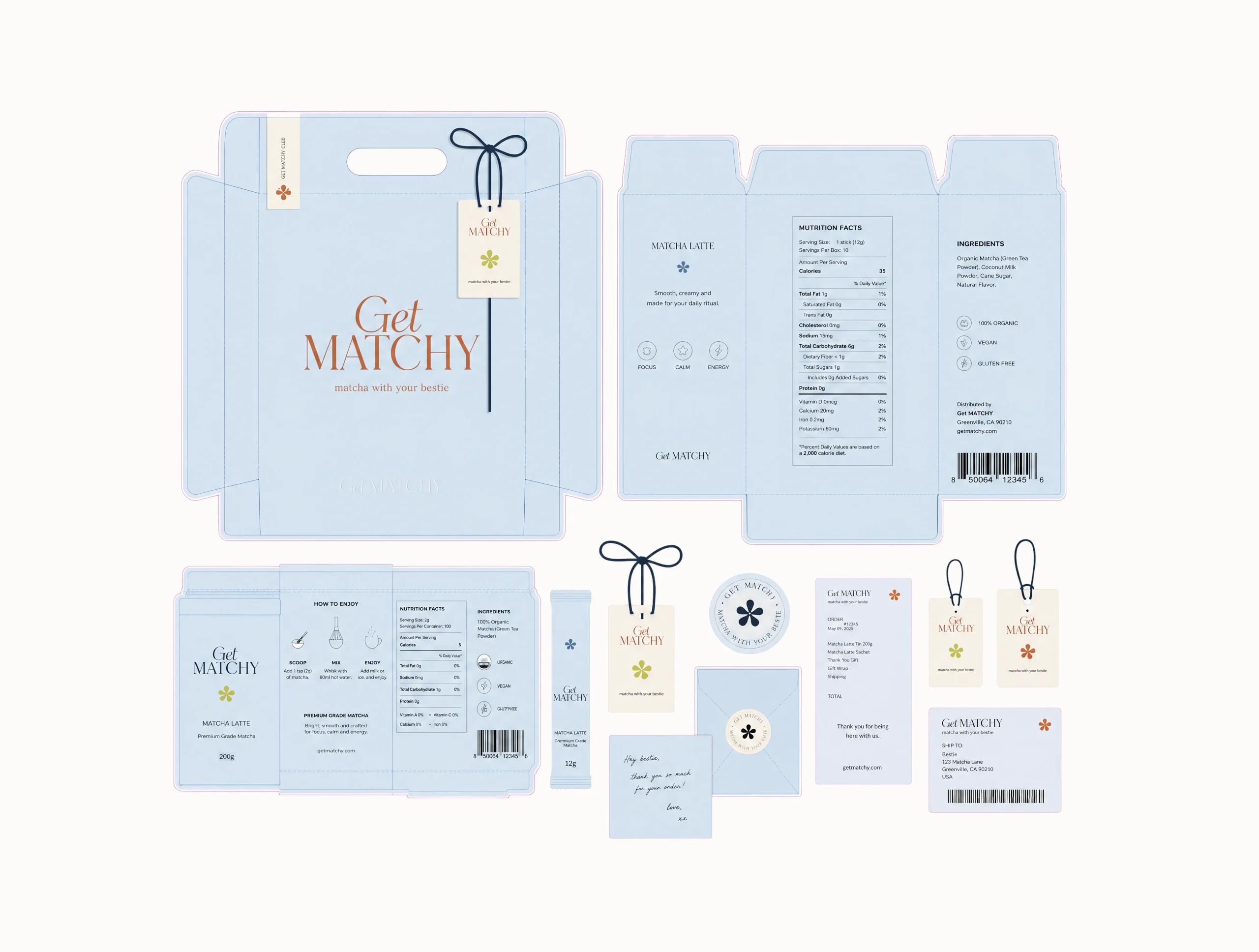
Material choice is a design decision. The PPWR makes it a legal requirement as well.
What applies now, and what comes later
The regulation entered into force on 11 February 2025 and has applied since 12 August 2026. Most of what actually bites sits further out, and that detail is why so many people file it under later. The requirements carry different dates, and several of them hang on acts the Commission has not adopted yet.
The dates worth writing down:
- By 12 February 2028, the Commission adopts the method for calculating empty space. From the same date, whoever fills sales packaging has to keep empty space to the minimum needed for the packaging to do its job.
- From 12 August 2028, or 24 months after the implementing acts if that falls later, packaging carries a harmonised label with information on its material composition.
- From 1 January 2030, packaging has to be designed for recycling, plastic packaging has to contain a minimum share of recycled plastic, and the cap of 50 per cent empty space in grouped, transport and e-commerce packaging applies.
- From 1 January 2035, packaging also has to be collected separately, sorted and recycled at scale in practice.
- From 1 January 2038, packaging has to reach at least recyclability grade B to be placed on the market at all.
- From 1 January 2040, the recycled content requirements go up sharply.
Four years sounds like plenty of time. It is not, if you have a packaging in production. Tooling for a print form, renegotiated contracts with a converter, new material samples, new proofs and a phase out of existing stock take that long with room to spare.
The four requirements that are design decisions
1. Everything has to be recyclable
Article 6 is short and uncomfortably clear: “All packaging placed on the market shall be recyclable.”
Then it defines what that means, and the definition has two halves with different dates. From 2030 the packaging has to be designed for material recycling, so that what comes out is of sufficient quality to substitute primary raw material. From 2035 it also has to be collected separately, sorted into a specific waste stream without wrecking the recyclability of other streams, and recycled at scale.
The second half is the uncomfortable one. A packaging can be recyclable in theory and still fail, because no facility actually sorts it.
2. Plastic has to contain recycled plastic
Article 7 puts numbers on it. From 1 January 2030, or three years after the implementing act if that falls later, every plastic part of a packaging has to contain at least:
- 30 per cent for contact sensitive packaging made mainly from PET
- 10 per cent for contact sensitive packaging made from plastics other than PET
- 30 per cent for single use plastic beverage bottles
- 35 per cent for all other plastic packaging
From 2040 the same four numbers become 50, 25, 65 and 65 per cent.
This is not only a purchasing problem. Recycled plastic is rarely as clear, as white or as colour stable as virgin material. A design that leans on a crystal clear substrate or an exact PMS match on plastic gets harder to hold, and it is better to know that while you are drawing.
3. Empty space becomes a percentage
For grouped packaging, transport packaging and e-commerce packaging, whoever fills the box has to ensure that “the maximum empty space ratio, expressed as a percentage, is 50 %”.
So no more than half air in an e-commerce carton. The method for calculating it arrives by 12 February 2028, and it has to account for products with irregular shapes and for packaging that protects what is inside. Air cushions and paper cuttings do not help you, because filling material counts as empty space.
This is the provision that changes the most for the smallest brand with a webshop, and I wrote a separate post about it.
4. The label becomes common
From 12 August 2028, or 24 months after the implementing acts if that falls later, packaging has to carry a harmonised label with information on its material composition, built on pictograms.
Harmonised across the union means the symbol you drew yourself for your brand guidelines is no longer an option on that surface. It also means the label has to fit, be legible, and sit somewhere that does not ruin the design. That is a layout problem, and it is better solved in an artwork file than with a sticker afterwards.
Some formats disappear altogether
Separately from the design requirements, a short list of packaging formats cannot be placed on the market from 1 January 2030. Annex V is worth reading once if any of it is close to your product, because no amount of clever design saves a format that is simply not allowed.
It covers single use plastic grouped packaging, so the shrink wrap and collation film around a multipack. Single use plastic packaging for less than 1,5 kg of pre packed fresh fruit and vegetables, with exemptions member states may set for genuine preservation reasons. Single use plastic tableware for food and drink eaten on the premises in hotels, restaurants and cafés. Single use plastic portion packs for condiments, sauces, sugar and seasoning in the same sector, with exceptions for takeaway and for care settings. Single use cosmetics and toiletry packaging in accommodation intended for one booking, meaning the hotel miniature. And very lightweight plastic carrier bags, unless they are needed for hygiene or to prevent food waste.
Who has to do what
The requirements do not all land on the same desk, which is worth knowing before a conversation with a supplier turns into a stalemate.
Recyclability and recycled content sit with the manufacturer or the importer. Minimisation, which says packaging has to be reduced to the minimum weight and volume needed for it to function, sits there too. The empty space cap sits with whoever fills the box, which in practice means the brand and not the converter. Everyone in the chain will point at someone else at least once. The design decisions are upstream of all of them.
What a designer actually does about this
Nothing on the list above is solved by a document. Almost all of it is decided by choices made early that are expensive to change late.
The material. A monomaterial is easier to sort than a laminate. Ruling out a combination is a decision taken in the sketch, not in production.
The form. The empty space ratio is decided by the proportions between product and packaging. A carton drawn around its contents instead of around a standard size solves the requirement by itself.
Colour and glue. Full coverage colour, metallised layers and aggressive adhesives can block sorting or contaminate the material stream. That is craft knowledge about print and materials, not law.
The layout. A label that has to sit there anyway is easier to make beautiful if it is there from the start.
Half my education is in fashion and textiles, and I work with print artwork and packaging design alongside the digital work, which is exactly the combination this regulation asks for. There is more about that on what I do.
What I would do first
If I had a packaging in production today I would start with three things, in this order.
First: write down what the packaging is actually made of, layer by layer, including adhesive, varnish, label and ink. A surprising number of people do not know this about their own packaging, because the answer lives with the supplier.
Then: measure the empty space in the box you ship today. Not the one you think you ship in, but the one that actually goes out.
Last: find out whether what you have chosen can be sorted in practice where your customers live, not only in theory.
None of the three needs a lawyer, and all three decide how much work you have ahead of you.
The next two posts in the series go deeper: the empty space ratio and the e-commerce carton, and design for recycling as a craft.
Read next