Empty space is a legal question now, not a taste question
No more than 50 per cent air in an e-commerce carton. The rule is short, and it is settled by the proportions between product and box. Everyone has had one. A carton the size of a moving box, one small thing at the bottom, and a handful of air cushions on top. Until now it […]
No more than 50 per cent air in an e-commerce carton. The rule is short, and it is settled by the proportions between product and box.
Everyone has had one. A carton the size of a moving box, one small thing at the bottom, and a handful of air cushions on top. Until now it has been a matter of taste, a sign that somebody did not care very much.
Since 12 August 2026 it is a matter of law. Regulation (EU) 2025/40 puts a number on how much air a packaging is allowed to contain.
What it actually says
The provision covers three things: grouped packaging, transport packaging and e-commerce packaging. So not the packaging the product is sold in, but the one it is shipped in.
The requirement is that whoever fills them has to ensure that “the maximum empty space ratio, expressed as a percentage, is 50 %”.
No more than half air. That is the whole rule.
Three things are worth knowing about it. It falls on whoever fills the packaging, not on whoever manufactures the carton, so the responsibility sits with the brand and not with the supplier. It does not apply to reusable packaging inside a re-use system, or to sales packaging used as e-commerce packaging, although that packaging still has to meet the separate minimisation requirement. And the obligation itself bites from 1 January 2030, or three years after the implementing acts if that falls later.
Which is the part most people get wrong in both directions. The regulation applies now. This particular number does not have to be met until 2030. The reason to care today is that the number is already written down, and a packaging in production takes years to change.
The method for calculating empty space arrives in an implementing act by 12 February 2028. It has to account for products with irregular shapes, for packaging that has to protect what is inside, and for packaging holding more than one sales unit. So there is room for something that genuinely needs air around it to have it. That room is not meant to cover a box that is big because the warehouse only stocks one size.
One sentence in the text does more work than the rest of the article. Space filled by filling material, and it lists paper cuttings, air cushions, bubble wrap, foam, wood wool and polystyrene chips, counts as empty space. You cannot pad your way under the limit. Padding is the thing being measured.
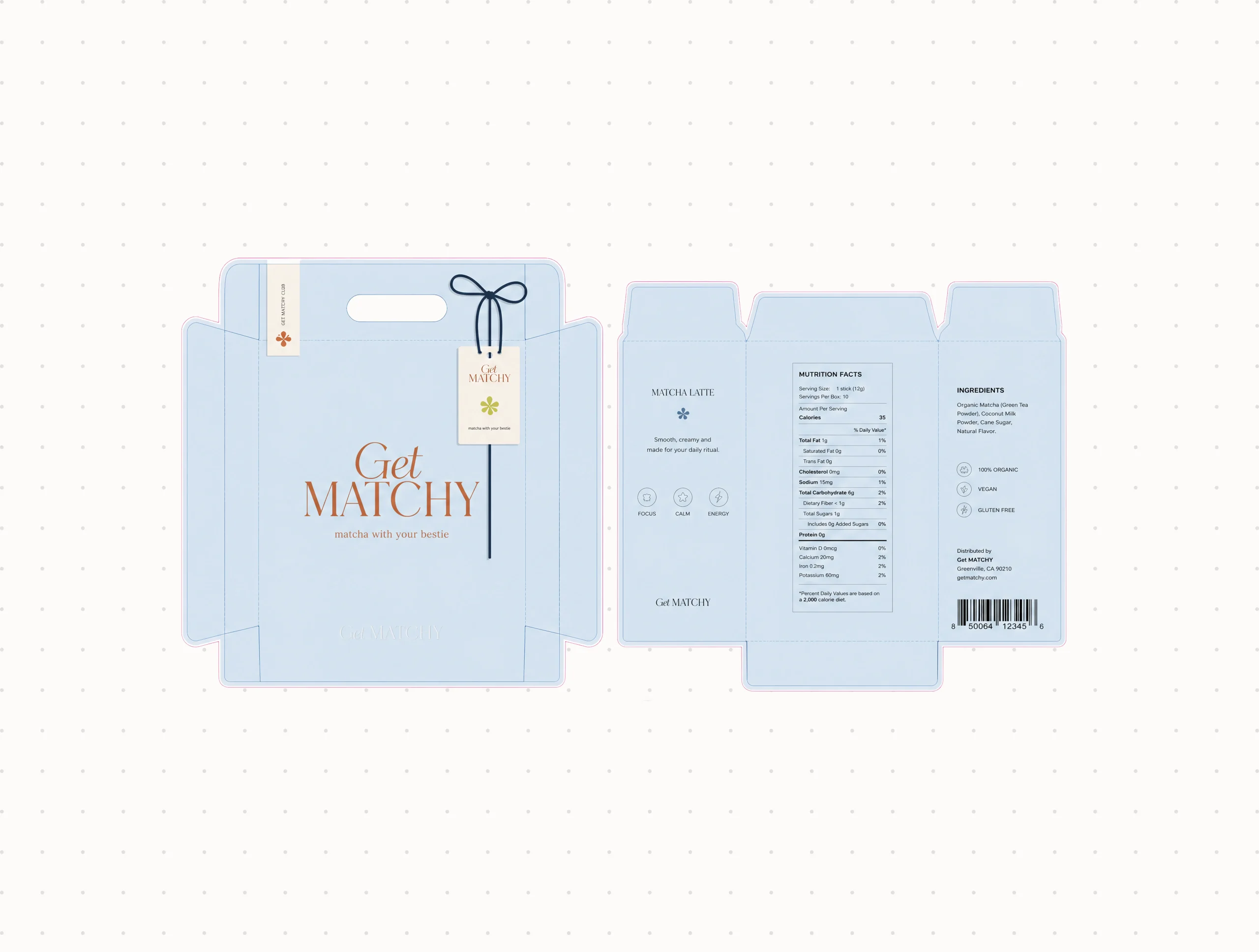
The empty space ratio is decided at the sketch stage, by the proportions between product and carton.
There is a second date that gets forgotten. By 12 February 2028, whoever fills sales packaging has to keep empty space to the minimum needed for the packaging to work, including protecting the product. And from 1 January 2030, packaging with features that exist only to make the product look bigger, double walls, false bottoms and unnecessary layers, cannot be placed on the market at all.
How the number is worked out
The definition is plain arithmetic. Empty space is the total volume of the shipping carton minus the volume of the sales packaging inside it. The ratio is that empty space divided by the total volume of the carton.
A carton of 30 by 25 by 15 centimetres holds 11,25 litres. A product in a sales box of 20 by 15 by 8 centimetres takes up 2,4 litres. The empty space is 8,85 litres, which is a ratio of 79 per cent. That is a very ordinary shipment, and it is nowhere near the limit.
Note what the calculation measures against: the volume of the sales packaging, not the volume of the product. An oversized product box therefore flatters this particular number, which is exactly why there is a second requirement aimed at sales packaging, and a third that bans double walls and false bottoms outright. The regulation has thought about that loophole already.
Why this is a design problem and not a warehouse problem
The usual reaction is to send the question to logistics. Wrong address. The empty space is created much earlier.
A carton contains air for three reasons, and all three were drawn.
The range of carton sizes is too small. With three sizes and fifty products, most products end up in the wrong size. Few sizes are cheap and shipping air is expensive, and the balance between those two has just shifted.
The product was drawn without anyone thinking about the box. A packaging whose shape does not stack tightly forces air around itself. If the outer form of the product is settled first and transport is solved afterwards, transport pays for it.
Filling material is the solution to a problem that should not exist. Air cushions and paper cuttings are there because the product rattles. If it does not rattle they are not needed, and an insert that holds the product in place makes the carton smaller rather than larger.
What I would change first
Measure what you actually ship. Take ten real shipments, not ten you assemble for the measurement. Work out the volume of the carton and the volume of what is inside it. The ratio you get is the one you need to come in under.
Add a size in the middle, not at the ends. Most ranges are too sparse in the middle. One more size between the two most common ones usually moves more shipments under the limit than any other single change.
Draw the insert as part of the packaging. A folded insert in the same material as the carton holds the product still, removes the need for filling material, and keeps the packaging a monomaterial, which helps with the recyclability requirement at the same time.
Look at the height. It is almost always the height that is wrong. The base is fitted to the footprint of the product while the height is left over from a standard, and that is where the air sits.
The objection I hear most
But my product is fragile. Fair, and the regulation agrees with you in principle: the calculation method has to take account of packaging that protects what is inside, and of products with awkward shapes.
It just does not agree with the usual implementation. Loose fill protects a product by surrounding it with air, which is the thing being measured. A fitted insert protects it by stopping it from moving, which takes almost no volume. Same job, opposite effect on the number. Fragility is an argument for a better insert, not for a bigger box.
The second objection is that a smaller carton means more damage in transit and more returns. Sometimes true, and worth measuring rather than assuming, because most damage comes from a product moving inside its packaging rather than from the carton being tight.
What makes this easier than it sounds
A smaller carton is cheaper in material, cheaper to ship and easier to carry. The requirement pulls in the same direction as the economics, which is unusual for a legal requirement.
It is also the first meeting with the brand. A box that is the right size and opens neatly makes a different impression than a half empty carton with air cushions in it. Same argument as on a website: the things that look considered usually have been.
What you do not need to do today
You do not need to recalculate everything against a formula that does not exist yet. The method has not been adopted, and it will decide the details.
What you need is a rough picture of where you stand. If you are at 70 per cent air in your most common shipments, you have work ahead of you that will use up most of the time between now and 2030. If you are at 40, you have nothing to do at all.
The first post in the series goes through the regulation and its dates, and the next one is about design for recycling. Packaging design and print artwork are part of what I work with, see what I do.
Read next